


-

- Exhibitors
-
List of exhibitors
People are individual and social beings who want to be free. Yet they also strive for connection, appreciation, and recognition. The element-i philosophy brings these two aspects together and adds: freedom means doing what you want because you have reflected on what it may lead to—and then taking responsibility for those consequences. Essentially, freedom means: “We affirm what will happen as a result of our actions.” Even the youngest children are supported in line with this philosophy on their journey to becoming independent individuals who act responsibly toward themselves, others, and the environment.
Children can pursue their individual interests and decide for themselves what they want to play and learn. In the children’s conference, they and the educators contribute ideas for shaping the day. Through their daily work and by observing the children, educators develop impulses that enable a wide range of experiences.
A structured daily routine provides children with structure, orientation, and a sense of security. Phases of activity and relaxation, shared activities and free play, as well as exertion and recovery, alternate throughout the day.
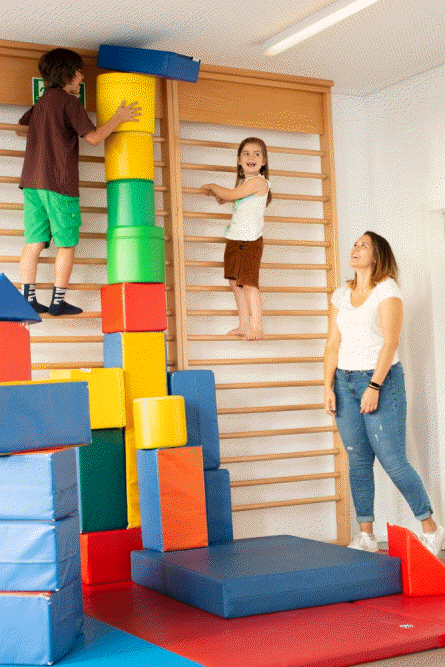
All element-i childcare centers are designed according to the element-i pedagogy. They feature functional areas/rooms that, whenever possible, are connected via a central “marketplace.” These include: an art studio, a construction room, a movement room, a lab, a role-play room, a quiet room, and a workshop. The so-called “Nest” offers the youngest children the sense of security they need and a sheltered atmosphere.
Especially in facilities in urban settings, it is important to make nature tangible and experienceable for children. Most element-i childcare centers have direct access to an outdoor play area. Spending time outside in almost any weather offers diverse opportunities for experience and development, encourages physical activity, and at the same time strengthens the immune system.
Children can pursue their individual interests and decide for themselves what they want to play and learn. In the children’s conference, they and the educators contribute ideas for shaping the day. Through their daily work and by observing the children, educators develop impulses that enable a wide range of experiences.
A structured daily routine provides children with structure, orientation, and a sense of security. Phases of activity and relaxation, shared activities and free play, as well as exertion and recovery, alternate throughout the day.
All element-i childcare centers are designed according to the element-i pedagogy. They feature functional areas/rooms that, whenever possible, are connected via a central “marketplace.” These include: an art studio, a construction room, a movement room, a lab, a role-play room, a quiet room, and a workshop. The so-called “Nest” offers the youngest children the sense of security they need and a sheltered atmosphere.
Especially in facilities in urban settings, it is important to make nature tangible and experienceable for children. Most element-i childcare centers have direct access to an outdoor play area. Spending time outside in almost any weather offers diverse opportunities for experience and development, encourages physical activity, and at the same time strengthens the immune system.
.jpg "Logo")
Hall 8.1 | E081